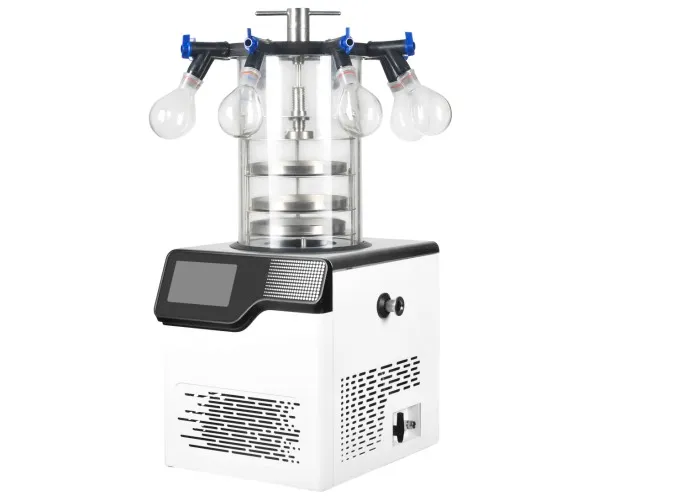
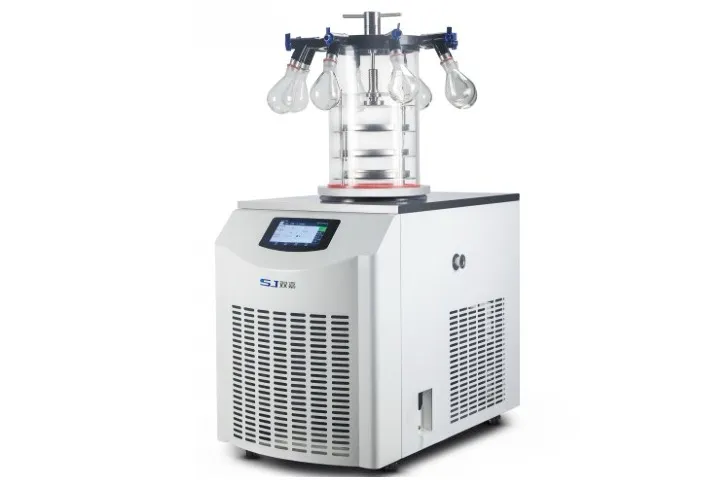
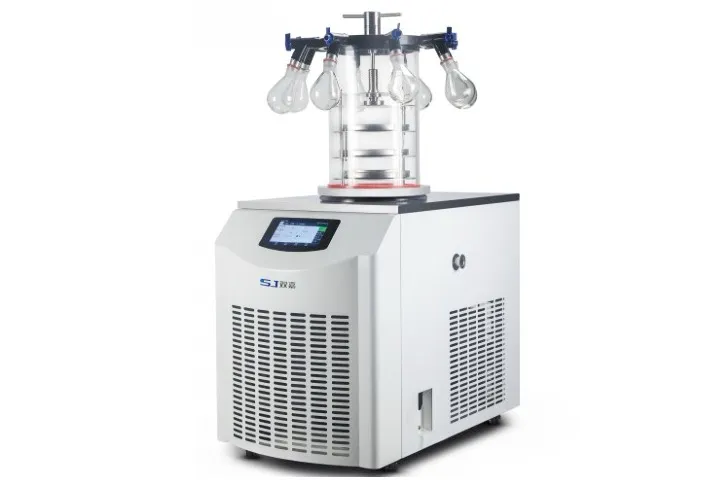
A manifold freeze dryer connects pre-frozen samples in individual flasks directly to a common vapor path. It is useful for research laboratories handling multiple bulk samples, extracts and cultures, but it must be sized by ice load and port use rather than by the number of valves alone.
When a manifold is the right format
Manifolds suit pre-frozen material spread as a shell inside round-bottom or wide-mouth flasks. Each flask has a direct vapor path and can often be isolated individually.
They are less suitable when a controlled shelf recipe, precise vial heat transfer or in-chamber stoppering is the main requirement.
Count active ports and real ice load
List flask size, liquid volume and how many ports will operate at the same time. Estimate frozen water for a routine and peak batch, then compare it with condenser capacity and defrost frequency.
A large manifold on a small collector can create slow pull-down or vapor overload even when every connection physically fits.
Protect the sample and vacuum pump
Use vacuum-rated flasks, secure every connection and provide implosion protection required by the laboratory. Keep the sample frozen during transfer and do not allow liquid to be drawn toward the manifold.
Review solvent composition, pump oil, exhaust and seal compatibility before processing anything other than approved aqueous samples.
Model direction
LYR-3 supports compact entry work, LYR-6 provides more condenser and recurring-load margin, and LYR-12 is intended for higher laboratory throughput. Final port count and accessories are confirmed with the flask list.
Frequently asked questions
Can flasks be added during a run?
Some manifold valve arrangements allow individual isolation, but adding a warm or unfrozen load can disturb pressure and condenser performance. Follow the approved procedure.
Does the manifold freeze the sample?
Normally the sample is completely pre-frozen. The collector captures released vapor; it is not a substitute for controlled product freezing.