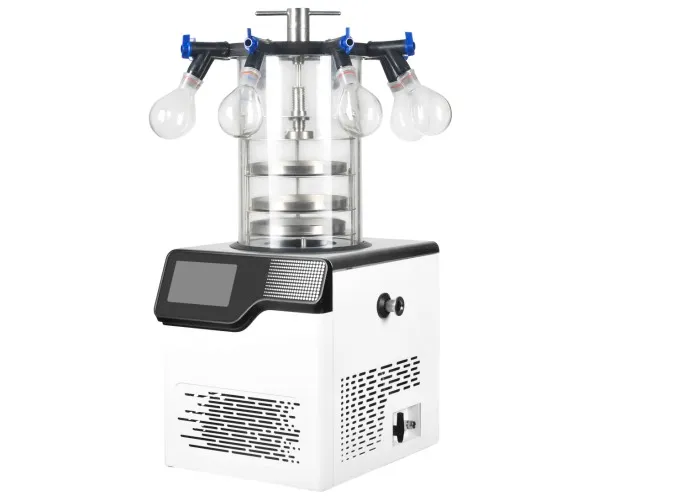
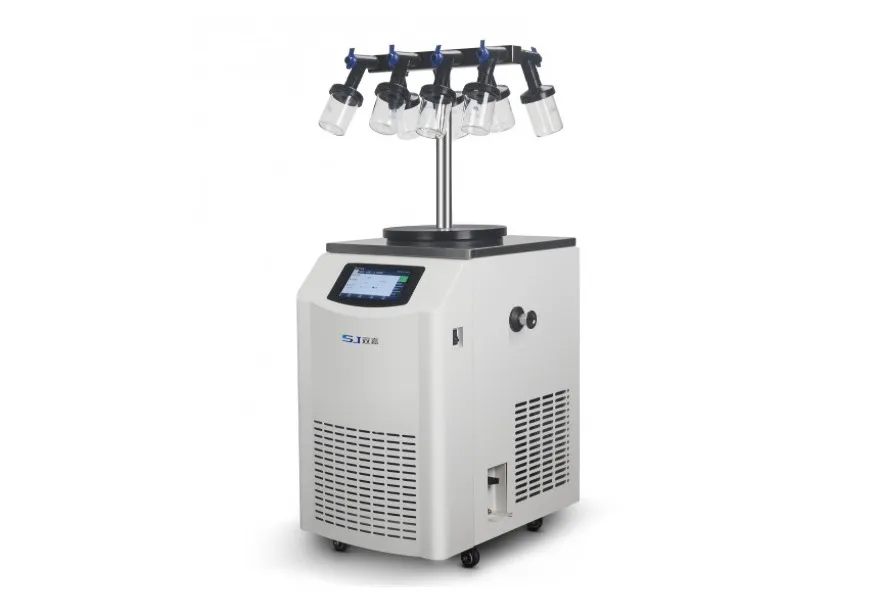
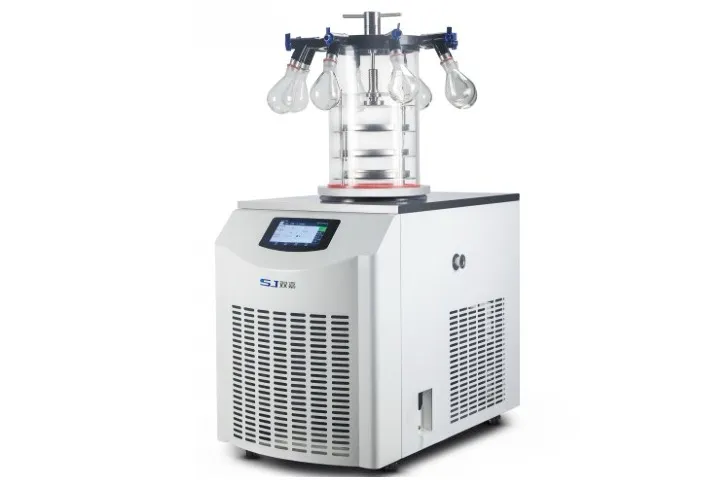
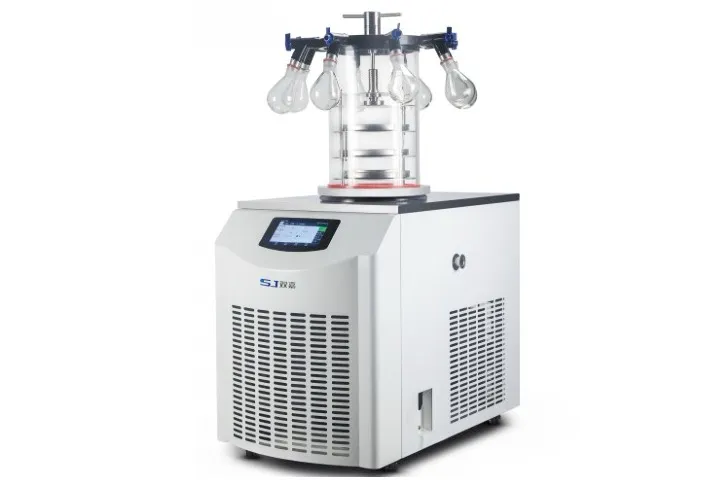
A -80 C class laboratory freeze dryer can provide additional vapor-pressure margin for low-temperature biological work and demanding loads. Selection still depends on sample composition, ice capacity, container format, pump performance and the required process record.
Why laboratories consider a -80 C condenser
A colder collector can improve capture margin when the product must remain cold or has a lower freezing behavior than routine aqueous samples. It can also support a broader range of approved laboratory work.
The condenser temperature is not the product temperature. Samples are usually pre-frozen externally unless a controlled shelf system is included.
Biological sample questions to resolve
State the sample type, buffer, concentration, volume, container, required activity or analytical result and the acceptable post-drying condition.
For proteins, cultures and other sensitive materials, the formulation and freezing history may matter more to recovery than the difference between two collector temperature labels.
Compare complete system performance
Review ice capacity, pull-down time, condenser surface, vacuum gauge, pump displacement, exhaust management and accessory chamber. Ask how performance is tested, not only for the lowest no-load temperature.
Solvent-containing samples require a separate compatibility and safety review. A -80 C label alone does not establish chemical suitability.
Available LabLyro configurations
LYR models can be configured around -60 C or lower-temperature condenser options depending on model and application. Select the chamber, rack or manifold at the same time so the complete load can be checked.
Frequently asked questions
Is -80 C always better than -60 C?
No. Routine aqueous work may not benefit enough to justify added complexity. Select from product behavior and required margin.
Can it dry organic solvents?
Only after confirming the specific solvent, concentration, materials, refrigeration, vacuum pump, exhaust and site safety controls.